How to Turn On a Portable Tire Pump and Inflate Tires
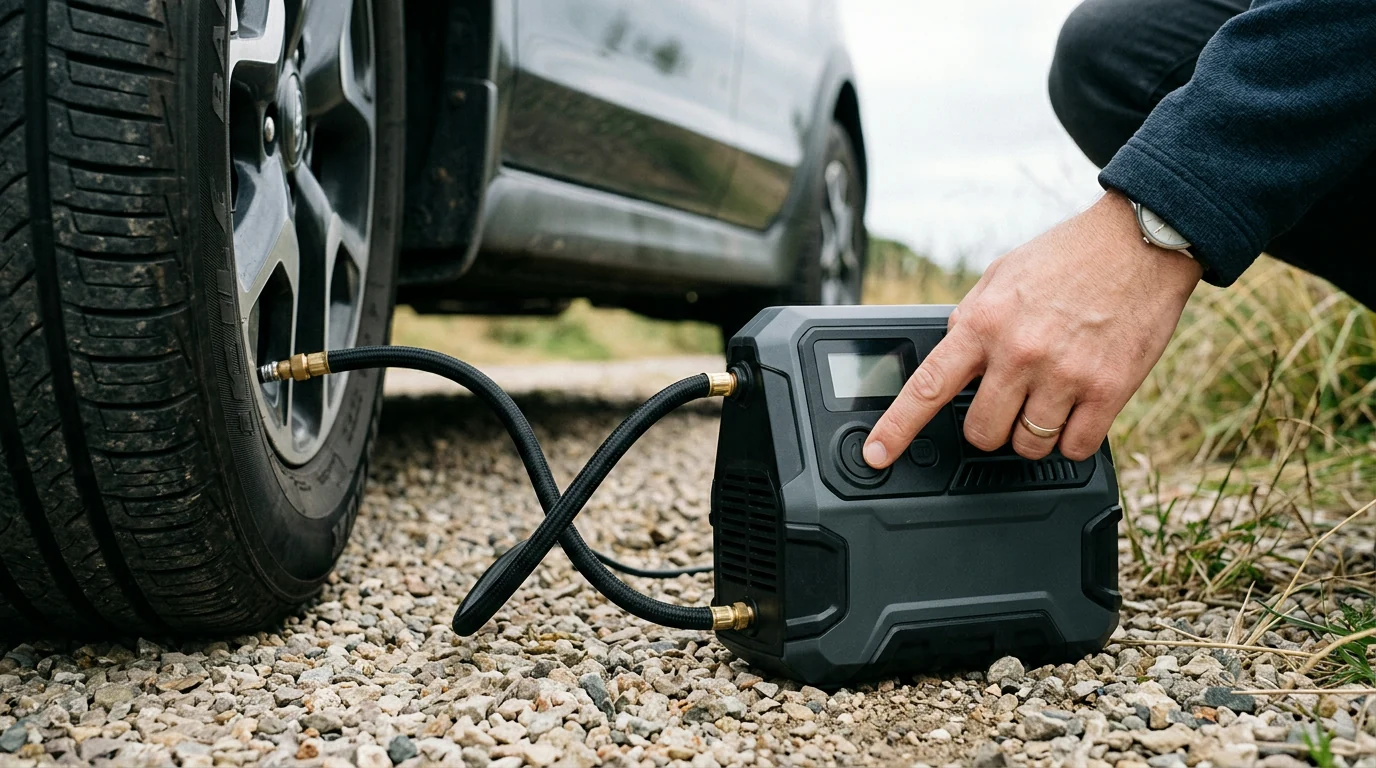
How do I turn on a portable tire pump?
To turn on a portable tire pump, first connect it to its power source, then press or hold its power button as directed by the controls. Attach the air hose to the tire valve, set your target pressure if the pump has that feature, and press the start button to begin inflation. Some pumps use the same button for power and inflation; others have separate controls.
We recommend checking your tire’s recommended pressure before you start. For a car, look for the pressure listed on the label inside the driver’s door jamb. Use that figure rather than the maximum pressure molded into the tire’s sidewall.
What should you do before starting the pump?
Park on a level surface and let the tires cool when possible. A reading taken after driving can be higher than the cold-tire pressure specified by the vehicle manufacturer. Gather the pump, its hose, and a suitable power source.
- Rechargeable pump: Charge the battery before use. Some models need their hose connected before inflation can begin.
- 12-volt pump: Plug the power cord into the vehicle’s 12-volt accessory outlet. Follow the pump and vehicle instructions for whether the engine should be running.
- AC-powered pump: Plug it into a compatible household outlet, keeping the cord and pump away from water.
How do you inflate the tire?
Remove the valve cap and keep it somewhere safe. Screw or clamp the hose connector onto the valve until it is secure. A brief hiss while connecting is normal, but a continuous leak means you should stop and reseat the connector.
Turn on the pump and select the correct pressure unit, usually PSI in the United States. If your pump has a preset, enter the recommended pressure. Start inflation and watch the gauge. Some pumps stop automatically at the preset; others require you to stop them manually.
When the tire reaches the target pressure, stop the pump, disconnect the hose, and replace the valve cap. You can use a separate tire gauge to confirm the reading. If the pressure is too high, release a little air and measure again.
What if the pump does not start?
Make sure the battery is charged or the power plug is fully seated. Check that you have pressed the correct power or start control, and allow the pump to cool if it has stopped after extended use. Follow its instructions for operating and cooling times. If the tire will not hold pressure or has visible damage, stop and have it inspected rather than relying on the pump.
For more guidance on using and maintaining your inflator, visit our portable tire inflator guide.
FAQ
Can you overinflate a tire with a portable pump?
Yes. Stop at the vehicle manufacturer’s recommended pressure, and use a tire gauge to verify it if needed. If the pressure is too high, release a little air and measure again.






Leave a comment